Family stories
Questions to Ask Your Grandparents Before It Is Too Late
Choose a few open questions, ask permission before recording, and let the conversation follow the memories that matter to them.
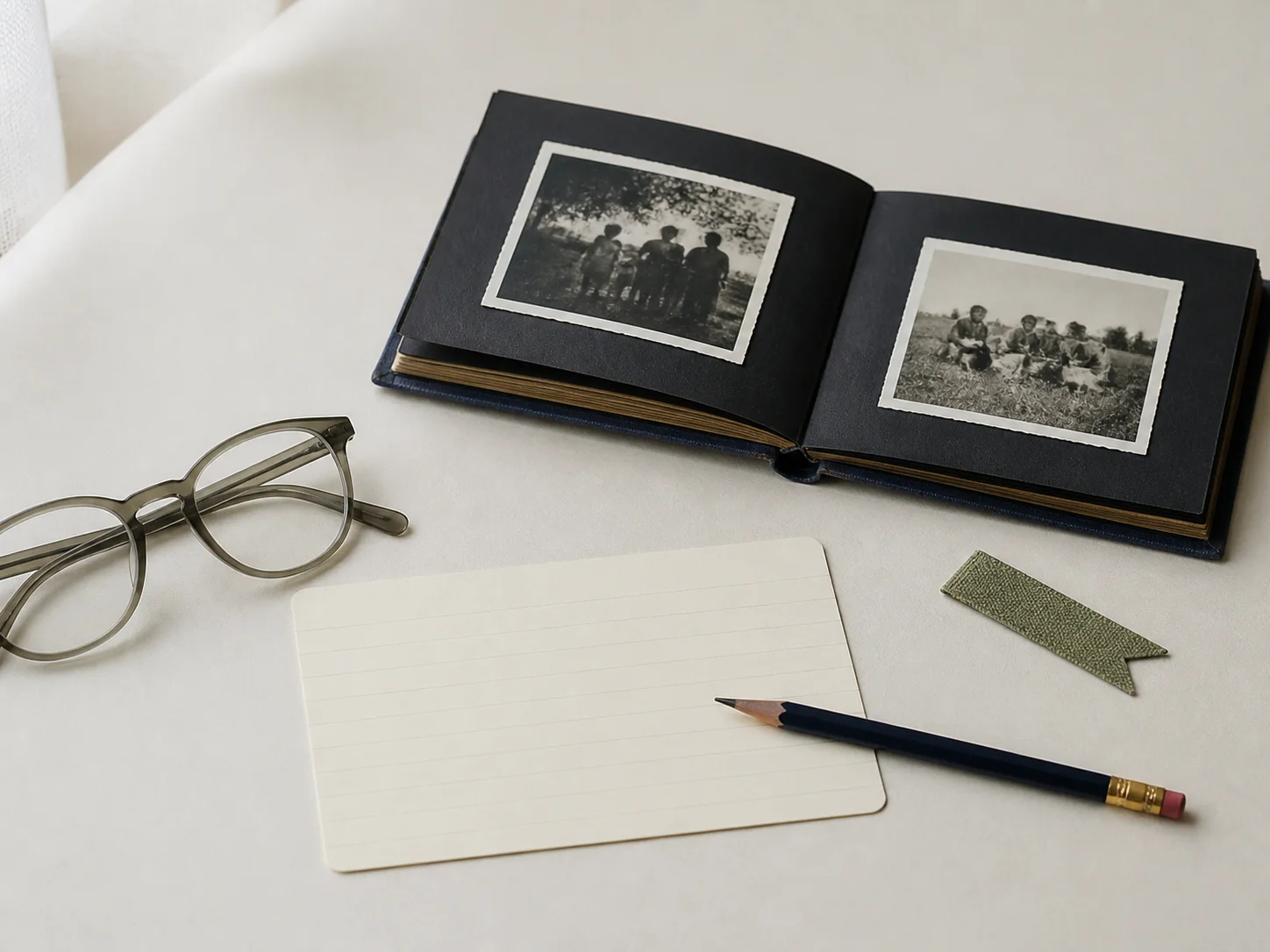
Do not try to ask every question at once. Choose five or six, begin with an easy memory, and follow the names, places, and details that come up.
Ask for a conversation, not an interview
Tell your grandparent why you want to hear their stories. Ask whether they are comfortable talking now and whether you may record audio, video, or written notes.
They can skip any question. If a subject makes them uncomfortable, move on. The goal is to spend time together and save what they want to share.
A plain way to ask
I realize there are parts of your life I do not know. Could we sit down sometime and talk about a few of them? I would like to remember the stories in your words.
Start with childhood and home
- What was the home where you grew up like?
- What did a normal school day look like?
- What games did you play when you had free time?
- What food do you remember from your childhood?
- Which place from those years can you still picture clearly?
Ask for details you can picture: the room, the street, the weather, the people nearby, and what happened next.
Ask about parents, siblings, and relatives
- What were your parents or caregivers like at home?
- What did your family do together every week?
- Which relative made you laugh?
- What family rule did everyone know?
- What story did older relatives tell again and again?
Names may lead to other names. Pause and ask who each person was, where they lived, and how they were connected.
Ask about work and money
- What was your first paid job?
- Who taught you how to do it?
- What did you save for when you were young?
- Which job taught you the most?
- What was harder about earning a living then?
Ordinary work stories can explain daily life better than a list of job titles. Ask about clothing, tools, schedules, co-workers, and the trip to work.
Ask about love and friendship
- Who was your closest friend when you were young?
- How did you meet your partner or someone you loved?
- What did people do for fun together?
- Who helped you during a difficult time?
- What have you learned about staying close to people?
Let your grandparent decide how personal to be. A short answer may be the whole answer they want to give.
Ask about change and turning points
- Which move or change affected your life most?
- What event from the wider world do you remember clearly?
- When did you have to make a difficult decision?
- What part of life turned out differently than you expected?
- What did you understand later that you did not understand then?
Ask what they want remembered
- Which family tradition matters most to you?
- Is there a recipe, object, or place whose story we should know?
- What are you most proud of?
- What do you hope our family keeps doing?
- What would you like your grandchildren or great-grandchildren to know about you?
Use follow-up questions
The best part of the conversation may not come from your list. Listen for a detail and ask a small follow-up.
- What happened next?
- Who else was there?
- What did that place look like?
- How did you feel about it then?
- Do you remember the words they used?
Leave a little silence after an answer. People often remember another detail when they are not rushed.
Save the story while the details are clear
Name the recording with the date, your grandparent’s name, and the main subject. Keep one copy somewhere else.
Write down the names and places you may need to check later. Do not change their words to make the story sound smoother. Keep the way they told it.
For a complete recording plan, read how to record family stories in one conversation.
Free printable
Bring a short question list
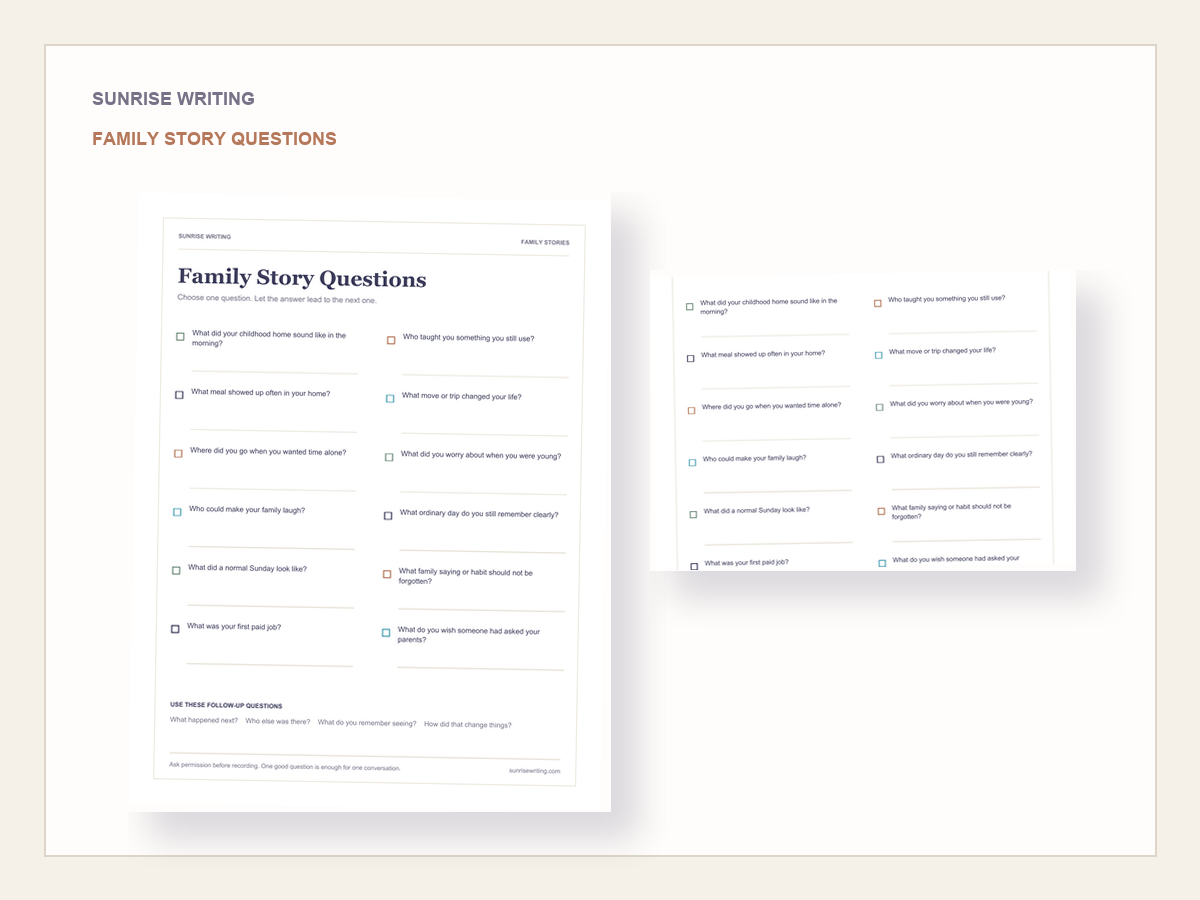
Family Story Questions gives you clear starting questions and follow-ups without turning the conversation into a form.
Enter your email and we will send it right away.