Family stories
How to Record Family Stories in One Conversation
Do not try to record a whole life at once. Choose one person, one topic, and a few clear questions.
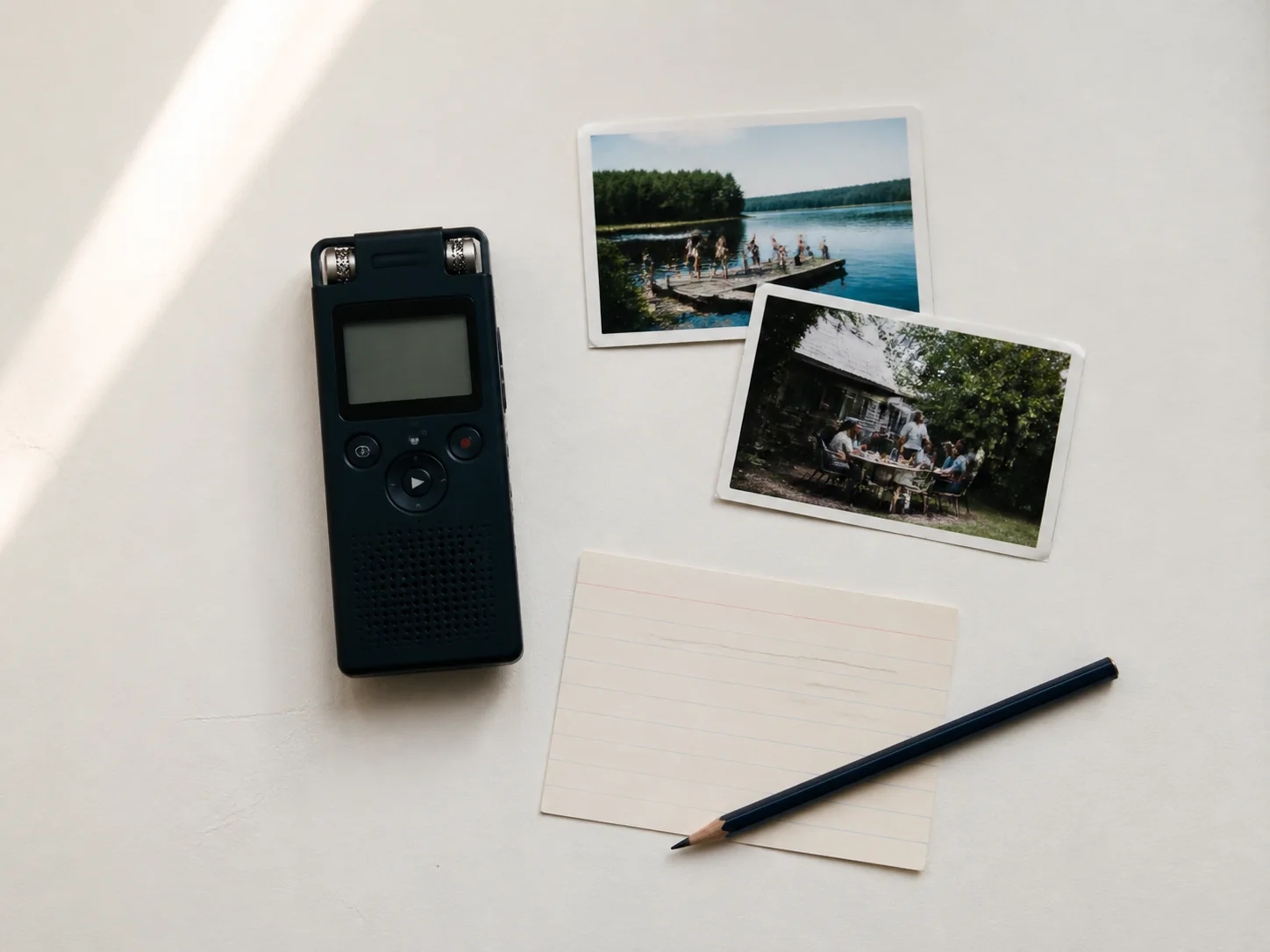
Ask permission, pick one topic, record on the simplest device you have, and let the conversation follow the details that matter to them.
Ask before you record
Tell the person what you want to do and why. Ask whether they are comfortable with audio, video, or written notes. Let them choose.
Also explain who may hear or read the story later. A family recording is personal. Permission should be clear before you press record.
A plain way to ask
I would like to save some of your stories for our family. Would you be comfortable if I recorded our conversation? We can stop at any time.
Choose one topic, not their whole life
“Tell me your life story” is a large request. A smaller subject gives the conversation somewhere to begin.
- The home where they grew up
- A job they still remember
- A family holiday or weekly routine
- A move that changed things
- A person who taught them something
- The story behind one photograph or object
One focused conversation is easier to arrange, easier to record, and easier to save.
Use the simplest recording tool
A phone voice recorder is enough for most family conversations. Put it close enough to hear both people and switch off notifications before you begin.
Record ten seconds, play it back, and check the volume. Choose a quiet room and close doors or windows if there is steady background noise.
Do not let equipment delay the conversation. Clear enough is better than a perfect recording that never happens.
Prepare five open questions
Questions that begin with what, how, or tell me about usually leave more room for a story than questions that can be answered with yes or no.
- What did a normal day look like then?
- Who else was usually there?
- What do you remember seeing, hearing, or eating?
- What happened next?
- Why has that memory stayed with you?
Keep the questions beside you, but do not treat them as a test you have to finish.
Start with an easy memory
Begin with something ordinary: a room, a meal, a school day, or a person they liked. This helps both of you settle into the conversation.
Save difficult or private subjects for later, and only ask if the person has shown that they want to talk about them.
Leave room after the answer
Do not rush to the next question. A short silence often gives someone time to remember another detail.
Listen for names, places, objects, and turning points. Those details give you natural follow-up questions: “What was she like?” “Where was that?” “What changed after that day?”
Record the basic facts at the beginning
Say the date, place, names of the people speaking, and the topic. This takes less than a minute and makes the file much easier to understand later.
Opening record
It is August 11, 2026. I am sitting with my father, Daniel, at his kitchen table. We are talking about the house where he grew up.
Stop while the conversation still feels good
Thirty minutes is enough for a first recording. You can stop sooner if the person is tired or the story reaches a natural ending.
Before you finish, ask whether there is anything they want to add and whether there is another story they would like to record next time.
Name the file and make a copy
Use a name you will understand later: date, person’s name, and topic. For example: 2026-08-11-daniel-childhood-home.m4a.
Keep the original file and one copy in a second place. You can also write a short note with the names and details you may want to check later.
Write down one sentence worth keeping
After the conversation, listen for one exact phrase that sounds like them. Write it down with the date and context.
Software can transcribe the recording, but it cannot decide which pause, laugh, family phrase, or small correction mattered in the room. That choice is still yours.
For more starting questions, use the guide to 25 questions to ask your parents about their life.
Free printable
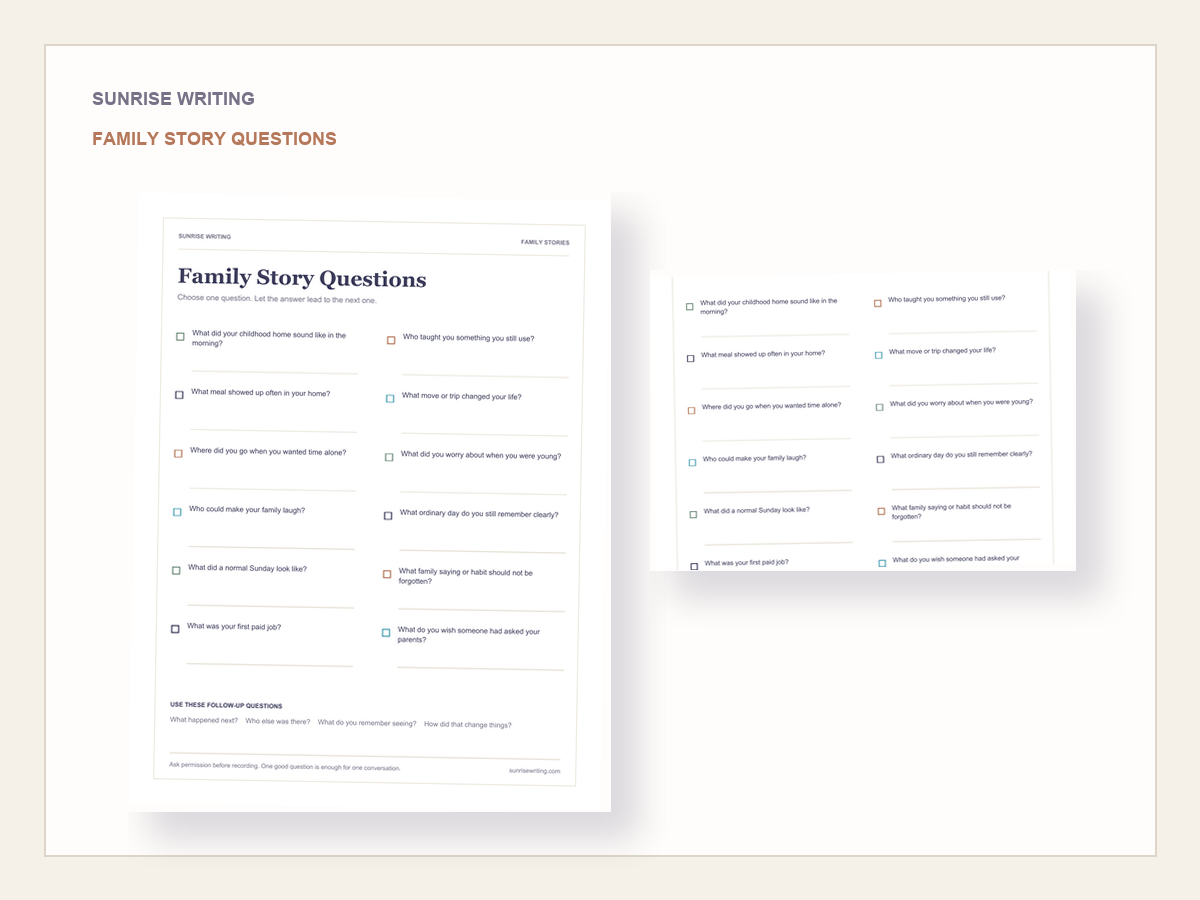
Bring a short question list
Family Story Questions gives you clear starting questions and follow-ups without turning the conversation into an interview form.
Enter your email and we will send it right away.