Family stories
25 questions to ask your parents about their life
Choose one or two questions, give them time to answer, and ask about the details. You are trying to hear a story, not finish a list.
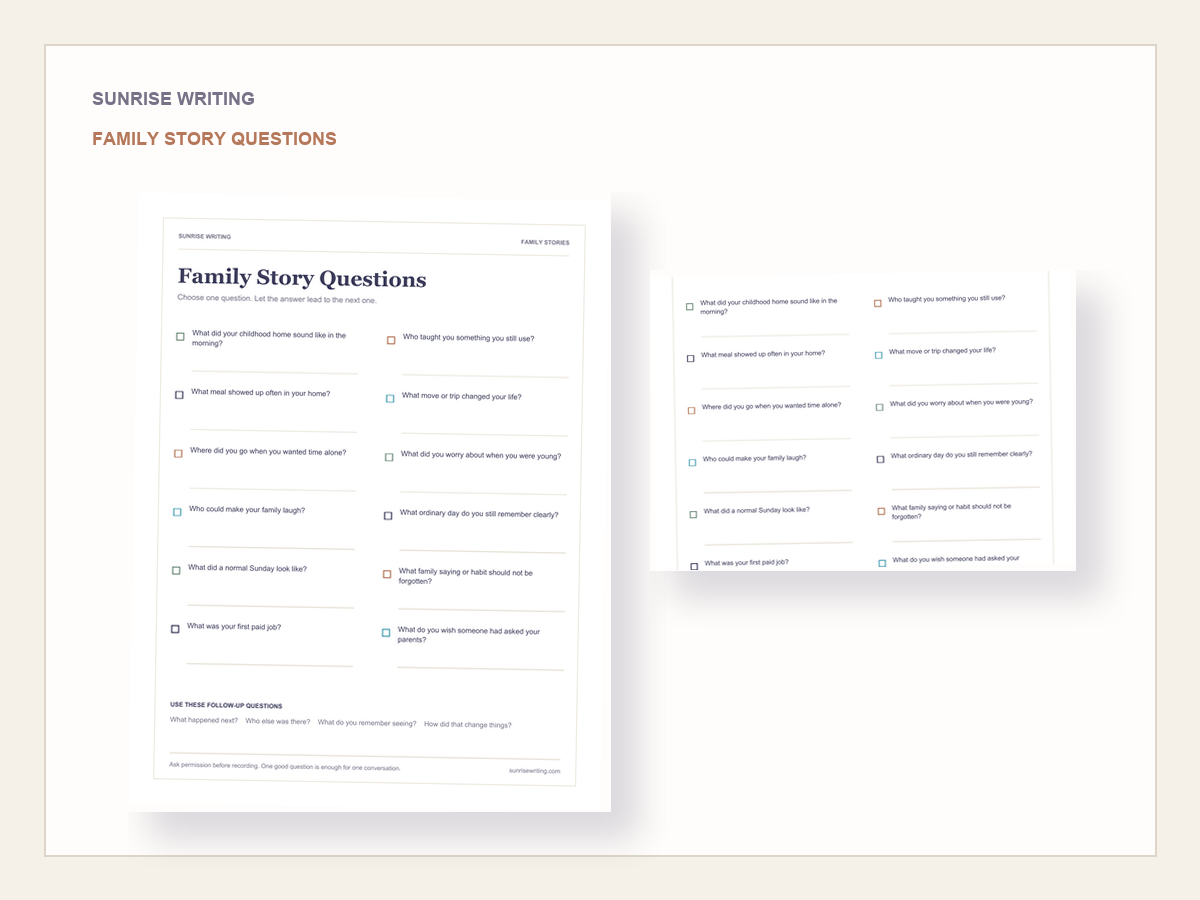
The best questions ask about a real place, person, day, or decision. Start with something easy, then follow the details that come up.
Before you begin
You do not need to make this formal. A quiet conversation at the kitchen table or in the car may work better than sitting down for an interview.
If you want to record the conversation, ask first. A phone recording can help you listen instead of taking notes, but some people will speak more freely without it. Either choice is fine.
Pick one to three questions for a conversation. Let your parent take the story in another direction. The questions are only a way to begin.
The 25 questions
Childhood and home
- What is the first home you remember, and what did it look like inside?
- What did an ordinary morning look like when you were a child?
- Where did you go when you wanted to be alone?
- What family rule do you remember most clearly?
- What meal, smell, or sound takes you back to that time?
People
- Who made you feel understood when you were young?
- Who could make everyone laugh, and what did they do?
- Who taught you something you still use today?
- Was there someone your family spoke about often but I never met?
- Which friendship changed your life, and how?
Work and money
- What was your first paid job, and what do you remember about the first day?
- What did money mean in your family when you were growing up?
- Which job taught you the most?
- Was there work you wanted to do but did not get the chance to try?
- What is something you bought or saved for that made you proud?
Turning points
- What decision changed the direction of your life?
- When did you have to be braver than you felt?
- What move, trip, or goodbye do you remember most clearly?
- Was there a time when your plans fell apart and something else happened?
- What did you believe when you were younger that you see differently now?
Ordinary life
- What was always on the kitchen table or in the living room?
- What did weekends usually look like?
- What small habit from your parents did you pick up?
- What ordinary day would you like to live one more time?
- What part of your life do you think our family should remember?
Four follow-up questions that help
When an answer brings up a real moment, stay there. These short questions often bring out the part that makes the story clear:
- What happened next?
- Who else was there?
- What could you see or hear?
- How did that change things for you?
Example
If your parent says, “We moved when I was twelve,” you could ask, “What do you remember seeing when you arrived?” That question is easier to answer than “How did the move affect your life?” You can ask about the meaning after you understand the moment.
Let difficult subjects stay optional
Some questions may touch grief, money, illness, family conflict, or other private parts of life. Say clearly that they can skip any question. Do not push for an answer because you think the story is important.
People also remember the same event differently. If a date or detail sounds wrong, let the story finish before you correct it. You can check facts later. Interrupting to fix a date can close down the part you were hoping to hear.
Save the details soon after
After the conversation, write down the names, places, and exact phrases you want to keep. Add the date of the conversation and who was there. If you made a recording, give it a clear filename and keep a second copy.
You do not need to turn every answer into a finished family history. One well-recorded story is already useful. Start with the person who is here and the question you can ask now.
Free printable
Take twelve questions with you
The Family Story Questions page has twelve of the strongest questions plus four simple follow-ups. It fits on one page.
Enter your email and we will send you the printable right away.