Personal letters
What to Write in a Letter to Someone You Love
You do not need a beautiful opening. Start with why you are writing now, then name one memory and what it means to you.
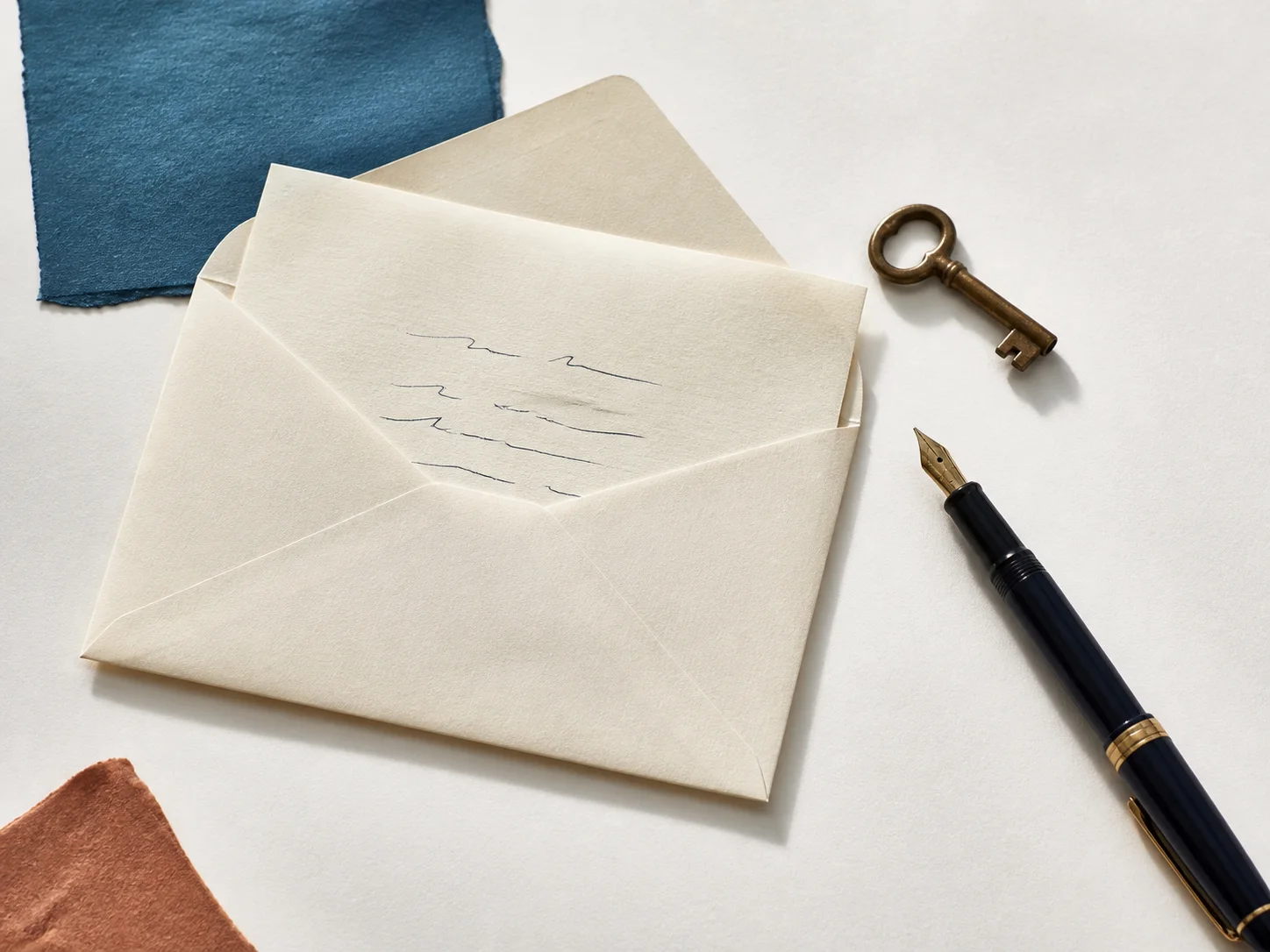
Tell them why you are writing, name one real memory, explain what it showed you, and say what you want them to know now.
Choose one reason for the letter
A letter becomes harder when you try to say everything at once. Decide what this one letter is for.
- To thank them for something specific
- To mark a birthday, move, wedding, or other change
- To say something you have delayed
- To apologize without making excuses
- To record an ordinary memory you share
Write the reason at the top of a planning page. You can cross it out later. Its job is to keep the letter focused while you write.
Start with why you are writing now
The opening can be plain. You do not need a quotation or a grand statement. A direct first sentence sounds more like a real person.
Simple openings
I have been thinking about the day you helped me move. I wanted to write down why I still remember it.
You could also begin with: “I should have said this sooner,” “Your birthday made me think about,” or “I keep coming back to.” Use the sentence that matches the real reason.
Include one memory only they will recognize
Specific details make the letter yours. Choose one scene instead of describing the whole relationship.
Where were you? What did they say? What small object or habit do you remember? What happened next?
More specific
I remember you standing in the empty kitchen with the box marked PLATES, making us eat sandwiches over the sink because we had packed every dish.
The detail does not have to be dramatic. It only has to be true and recognizable.
Say what the memory showed you
After the scene, explain why it stayed with you. This is often the part the other person cannot know unless you tell them.
You might say that they made you feel less alone, taught you how to handle a hard day, or showed up when you did not know how to ask for help.
Keep the explanation close to the example. “You are always there for me” is broad. “You drove three hours and never once made me feel like a burden” gives the words weight.
Say what you value about them now
Name a quality you have actually seen. Patience, steadiness, humour, honesty, care, and courage mean more when you connect them to something the person did.
You do not need a list of compliments. One clear observation is enough.
Write the sentence you do not want to leave out
Before you finish, ask: if they remember only one sentence, what should it be?
- I love you.
- I am proud of you.
- I am sorry.
- You mattered during a difficult part of my life.
- I want you to know that I noticed what you did.
Write it in your normal words. Do not hide the main point inside a long paragraph.
End without trying to sum up everything
A simple ending is usually stronger than a polished one. Tell them what you hope for next, return to the memory, or say that you are glad the two of you share it.
Then sign your name the way you normally would. The letter does not need to sound formal to be worth keeping.
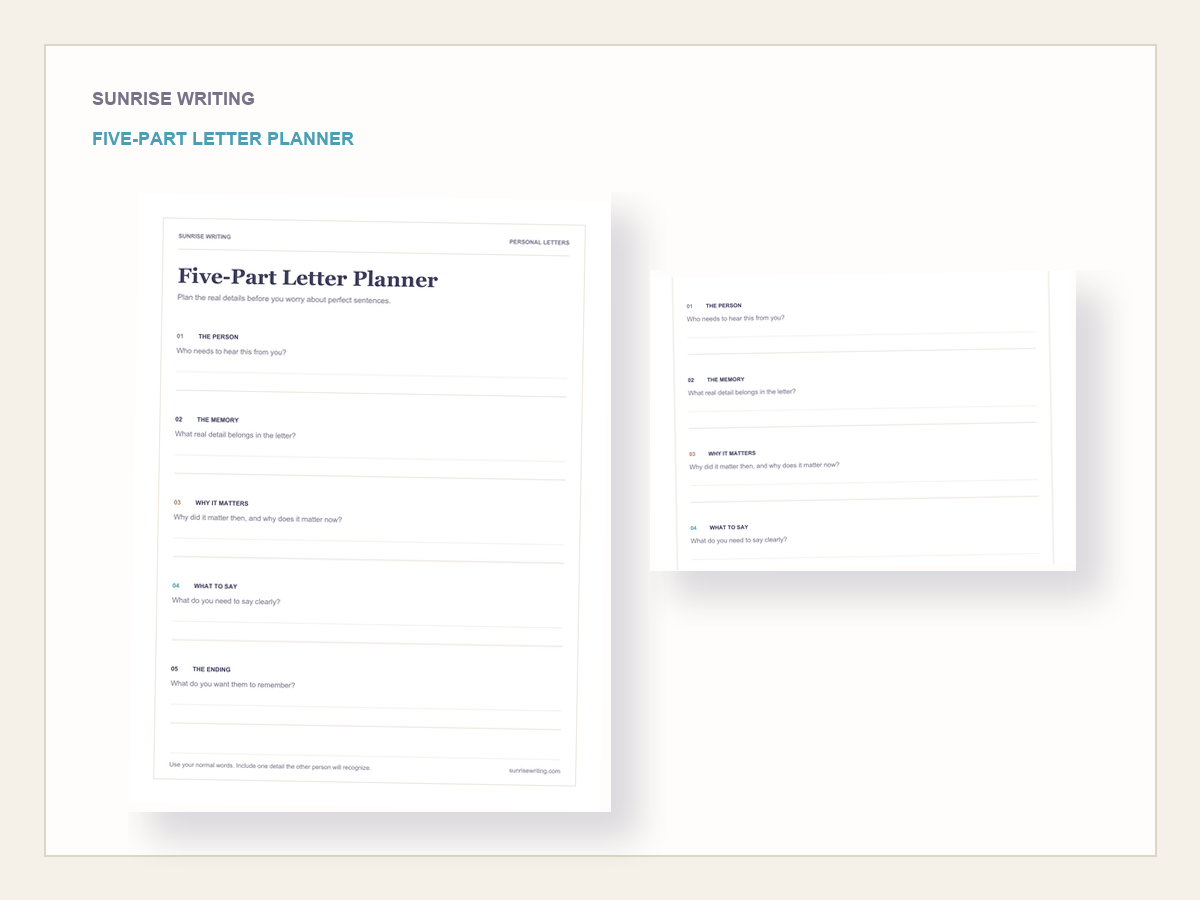
A five-part plan
- The person: who needs to hear this from you?
- The memory: what real detail belongs in the letter?
- Why it matters: what did that moment show you?
- What to say: what must be clear before the letter ends?
- The ending: what do you want them to remember?
For a fuller walk-through, read how to write a personal letter that sounds like you.
Keep the words that sound like you
A tool can make a letter smoother, but smooth is not always the goal. The phrase your family uses, the awkward joke they will understand, and the exact memory are part of the gift.
Use help for spelling or order if you need it. Do not let it replace the details that prove you were there.
Free printable
Plan the letter before you draft it
The Five-Part Letter Planner gives you one place for the person, the memory, why it matters, what to say, and the ending.
Enter your email and we will send it right away.