Morning writing
How to Start a Morning Writing Habit You Can Keep
Make the habit small enough to repeat. Use the same place, the same first question, and a short amount of time.

A morning writing habit works better when it asks very little of you at the start. Choose one page, one pen, and seven minutes.
Start smaller than you think
You do not need an hour, a perfect notebook, or a head full of ideas. You need a version of writing that still feels possible on a busy morning.
Start with seven minutes or one page, whichever comes first. A small limit removes the pressure to produce something important. It also gives the habit a clear ending.
A useful rule
I only have to write until the timer ends. I do not have to finish the thought.
Attach writing to something you already do
Pick one moment that already happens most mornings. It could be after you pour a glass of water, before breakfast, or as soon as you sit at the kitchen table.
Keep the order simple: do the usual thing, then open the page. The old action becomes the reminder for the new one.
Try to use the same place when you can. You are reducing the number of decisions you have to make before the first sentence.
Set up the page the night before
Leave the notebook and pen where you plan to write. Open to a clean page. If you use a printable, place it on the table before bed.
This is a small step, but it matters. A closed notebook in a drawer is easy to forget. An open page is a clear invitation.
Use materials that are easy to return to
Choose a notebook you are willing to use, not one that feels too special to mark. The same goes for the pen. It should work reliably and stay near the page.
Keep finished pages together. You do not need to reread them each day, but knowing where they belong makes the practice feel complete.
Make a version for rushed mornings
Some mornings will not give you seven quiet minutes. Decide on a smaller version before that happens: write the date and three true sentences.
The short version keeps the place in your day without pretending every morning is the same. Return to the full page when you have the room.
Use the same opening every morning
You do not need a new prompt each day. Repeating the same opening makes it easier to begin and lets different details rise on their own.
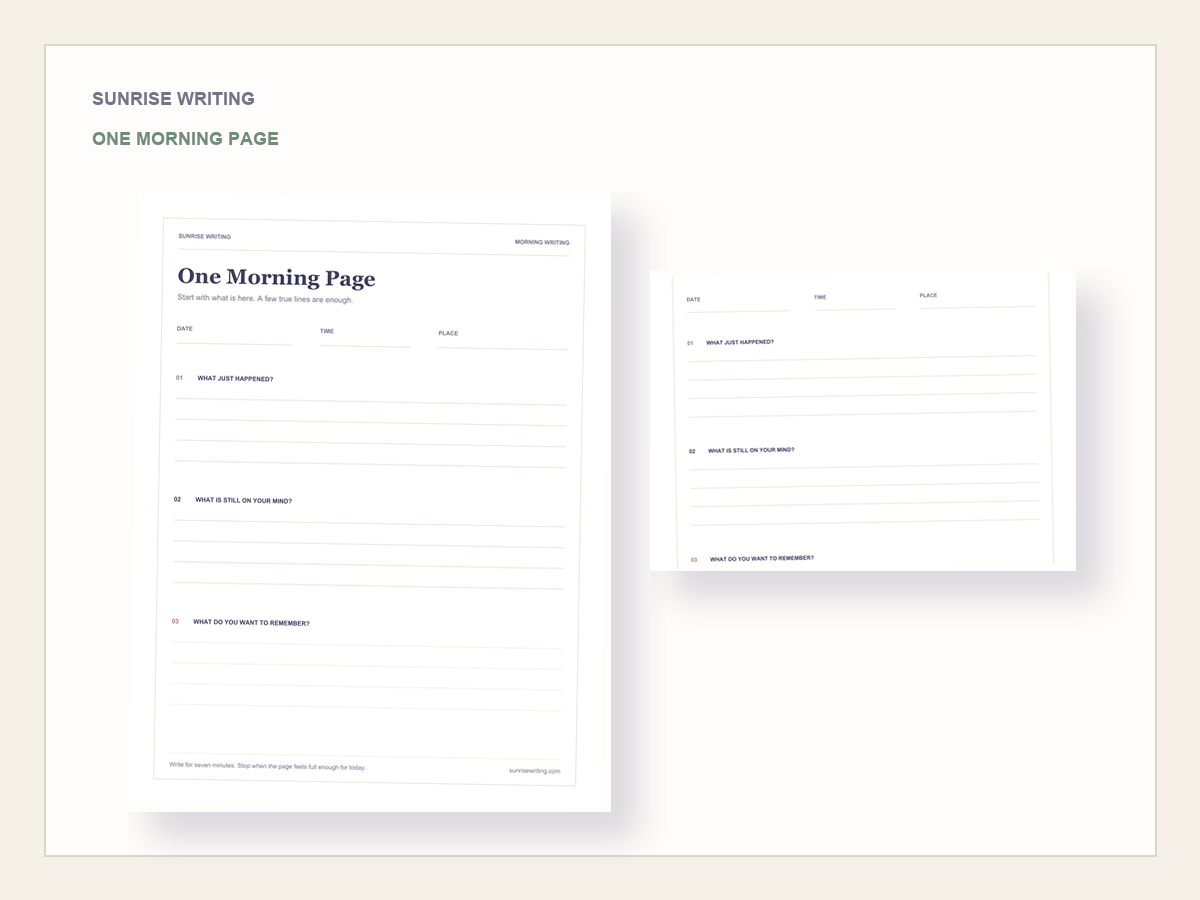
- Write the date, time, and place.
- Name one thing that just happened.
- Write what is still on your mind.
- End with one detail you want to remember.
If one of those questions gives you enough to write, stay with it. You do not need to complete every part.
Write facts before explanations
When you feel stuck, begin with what you can see or name. Facts give the page something solid to hold.
- The room you are in
- The weather outside
- The last thing someone said
- The task you keep avoiding
- The person you have been thinking about
After a few facts, write what they bring up. You can read more examples in what to write when you do not know what to write.
Do not catch up after a missed morning
If you miss a day, begin again the next morning. Do not add extra pages or turn the gap into a problem you have to fix.
A habit is not ruined by one missed day. The useful skill is returning without making the task bigger.
Keep the first page private
You will write differently if you are already thinking about sharing, posting, or cleaning up the words. Let the first page be rough and private.
A writing tool can help you arrange something later. It cannot notice the morning for you. Put down the real details before you ask anything else to shape them.
Try the habit for seven mornings
Seven mornings is long enough to learn when and where writing fits, but short enough to begin without making a large promise.
At the end of the week, look back for only three things: which time worked, which question helped you start, and which detail you are glad you wrote down.
Free printable
Use the One Morning Page
It gives you one place for the date, time, what just happened, what is on your mind, and one detail you want to keep.
Enter your email and we will send it right away.