Morning writing
What to write when you don’t know what to write
Start with a fact that is already in front of you. Write the date, the time, where you are, or the last thing that happened. Then ask one clear question.
You do not need a big idea before you start. Write down one real detail, then follow it for a few sentences.
Begin with what is true right now
A blank page can make it feel as though you need to think of something important. You do not. The easiest way in is usually the smallest true thing you can name.
Write the date. Write the time. Name the room you are in. Say what the weather is doing. Write the last sentence someone said to you. These facts give your mind somewhere solid to begin.
Example
Tuesday, 6:40 a.m. The bottom of the kitchen window is fogged. I keep thinking about the call I need to make after breakfast.
This is only an example, but notice what it does. It starts with something visible, then moves to the thought that is taking up space. That is enough for a page.
Use one of these four questions
You can answer one question or move through all four. Keep your answers specific. Names, places, objects, and exact words are more useful than trying to sum up your whole life.
1. What just happened?
Start close to the present. Write about the last hour, last night, or the moment before you sat down. Include one thing you saw or heard.
2. What is still on your mind?
Name the thought you keep returning to. It might be a decision, a conversation, a worry, or something you are looking forward to. You do not need to solve it. Just put it on the page.
3. What keeps returning?
Some details come back more than once: a person’s face, a sentence, a mistake, a plan, a place you miss. Write the detail first. Then write why you think it has stayed with you.
4. What do you want to remember?
Think about a small part of yesterday or this week that you may forget. What did someone wear? What made you laugh? What did the room look like? Record it while you still can.
A seven-minute way to start
Set a timer for seven minutes. The short limit keeps the task small. Use this order:
- Write the date, time, and place.
- Choose one of the four questions above.
- Write without fixing the first sentence.
- Circle one detail you want to keep.
Stop when the timer ends, even if you have more to say. You can come back tomorrow. A short page you actually write is more useful than a long routine you avoid.
If you still feel stuck
Write this exact sentence:
Starting sentence
I don’t know what to write. The next thing I can see is…
Finish the sentence. Then write the next thing you notice. You can also make a short list instead of a paragraph:
- Three things that happened yesterday
- One thing you are putting off
- One person you have been thinking about
- One detail from home you do not want to forget
Lists count as writing. Fragments count. The first page does not need to be smooth, complete, or worth showing anyone.
Keep the part only you would know
A writing tool can give you prompts or make a sentence cleaner. It cannot know what your kitchen looked like this morning, why that phone call matters, or which small detail will mean something to you later.
That is your part. Put the real detail down before you polish anything. The point is not to sound like a writer. The point is to leave a record of what you noticed.
Free printable
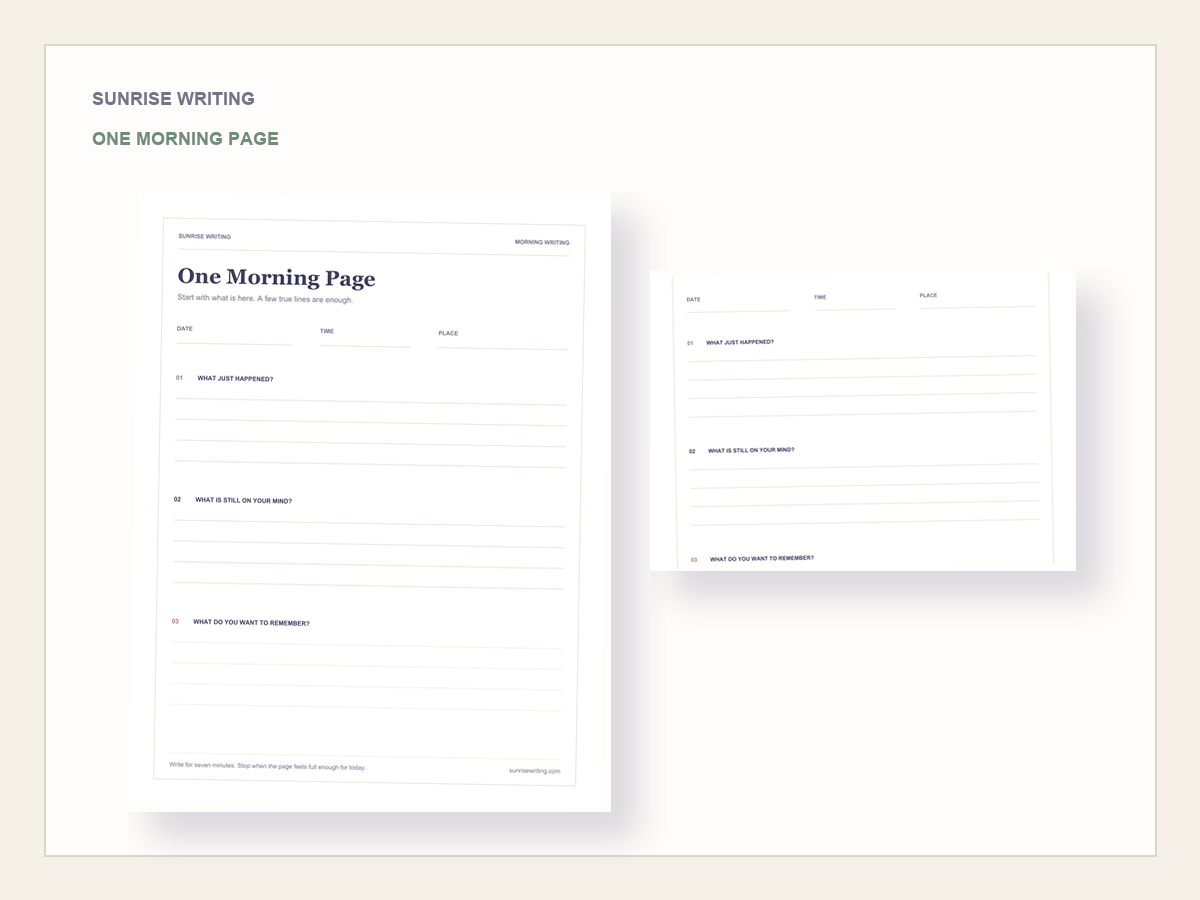
Use the One Morning Page
It gives you space for the date, time, place, what just happened, what is on your mind, and one thing you want to keep.
Enter your email and we will send you the printable right away.